


How to Paint a Fox in Watercolor (Easy Step-by-Step for Beginners)
There is something about a fox curled up in the leaves that makes everyone stop and smile. It looks like a difficult thing to paint, but a sleeping fox is really just a warm orange oval with a pointed nose and a fluffy tail - and watercolor keeps the fur soft so you never have to fuss. Learning how to paint a fox in watercolor is a cosy twenty-minute project that feels wonderfully autumnal.
You do not need to draw well or capture every hair. A slightly loose fox just looks soft and sleepy, and the warm russet colour does most of the charming for you.
A watercolor fox is four easy layers: a light outline and first russet wash, a deeper body, the fur and face, then a nest of autumn leaves. Keep the belly and tail-tip white and it looks soft and alive.
What you'll need to paint a fox in watercolor
- Watercolors - a warm russet-orange, a deeper burnt orange, a soft cream for the chest, and a little brown and black for the face. A few colours is plenty.
- A water-brush or a soft round brush - the water-brush holds its own water, so there is nothing to knock over and lovely control for soft fur.
- Thick paper - 300gsm so it will not buckle. Not sure what to buy? Here is the best watercolor paper for beginners.
- A pencil - for a light outline, if you are not using a guided page.
- A paper towel - to lift colour and soften edges.
Everything you see here comes ready-to-go in the Breathly Creative Escape Kit - the colours, the mess-free water-brush and guided pages - so there is nothing to shop for and nothing to clean up after. Browse the full range of watercolor kits whenever you like.
Step-by-step: how to paint a fox in watercolor
Step 1 - Outline and first russet wash
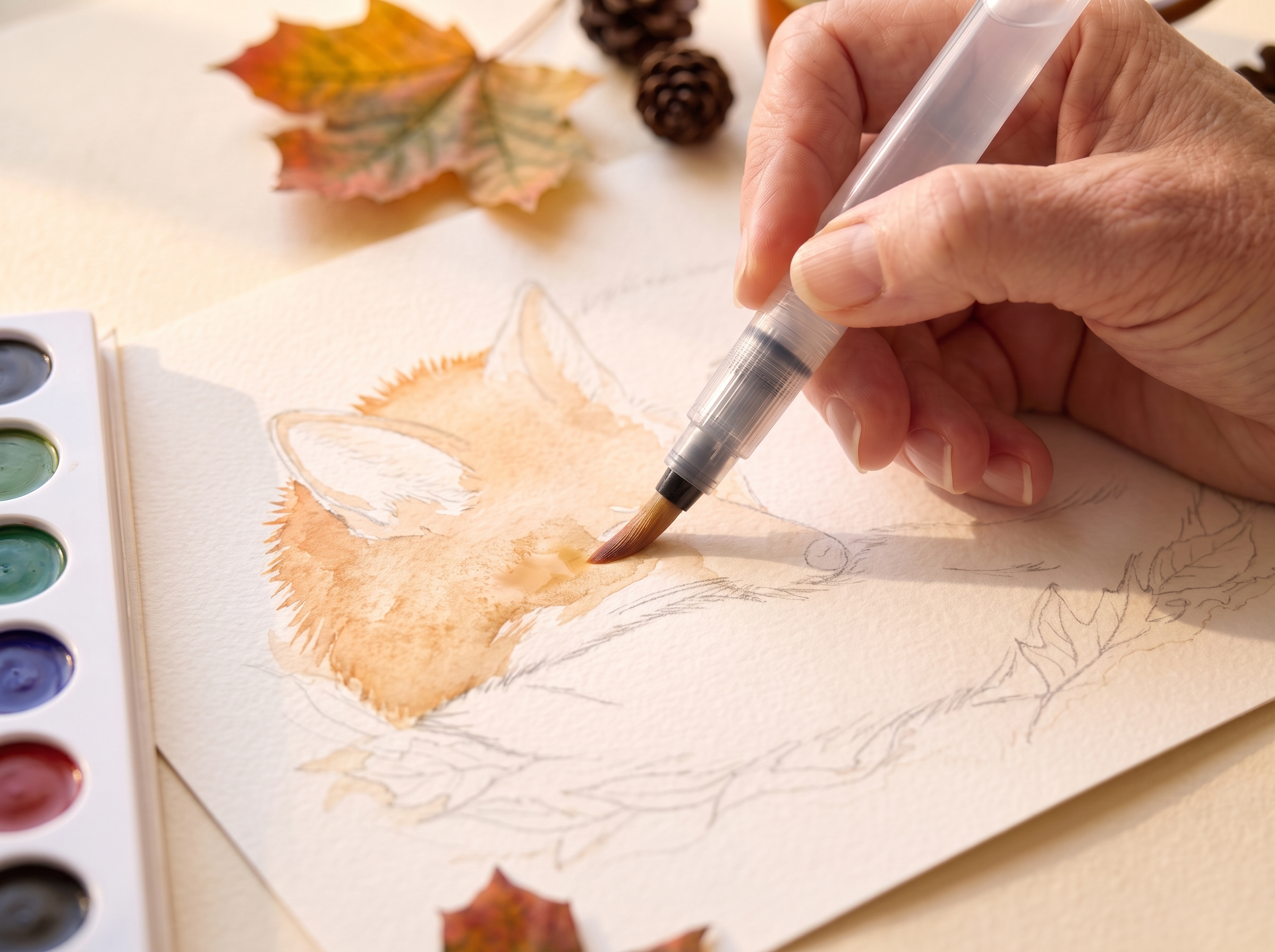
Sketch a soft curled shape - a rounded body, a tucked head with two pointed ears, and a big fluffy tail wrapping around. Lay a light russet-orange wash over the fox, leaving the chest, cheeks and tail-tip as bare white paper. This is just to tint the shape. Let it dry.
Save the white chest, cheeks and the very end of the tail. Those untouched patches are the difference between a flat orange blob and a soft, real fox. Do not paint over them.
Step 2 - Build the body
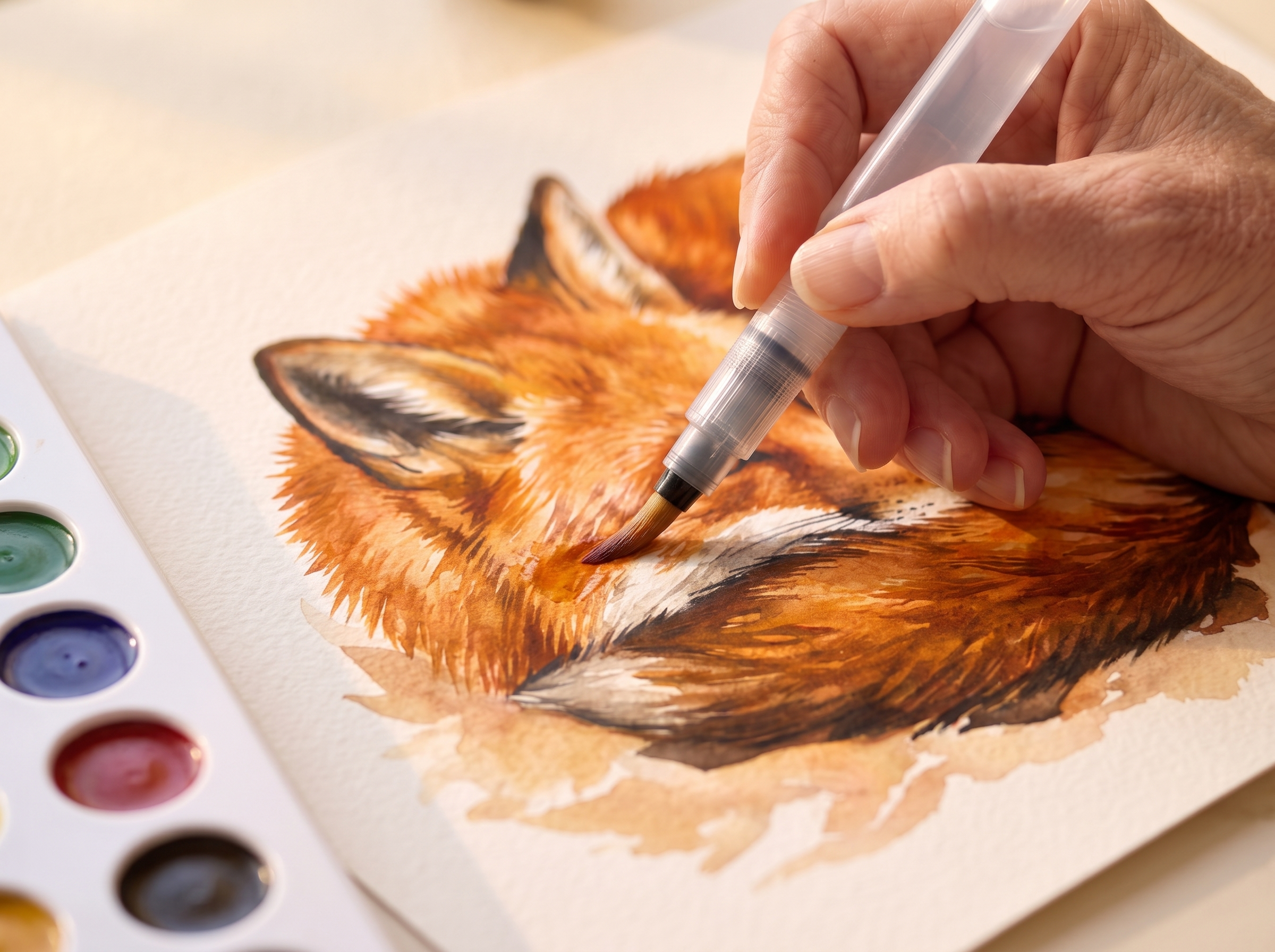
Go in with a deeper burnt orange along the back, the curl of the tail and under the chin where a fox falls into shadow. While it is damp, let the tones blend so there are no hard lines. That soft, rounded shading gives the fox its warm, sleepy weight.
Step 3 - Fur, face and white markings
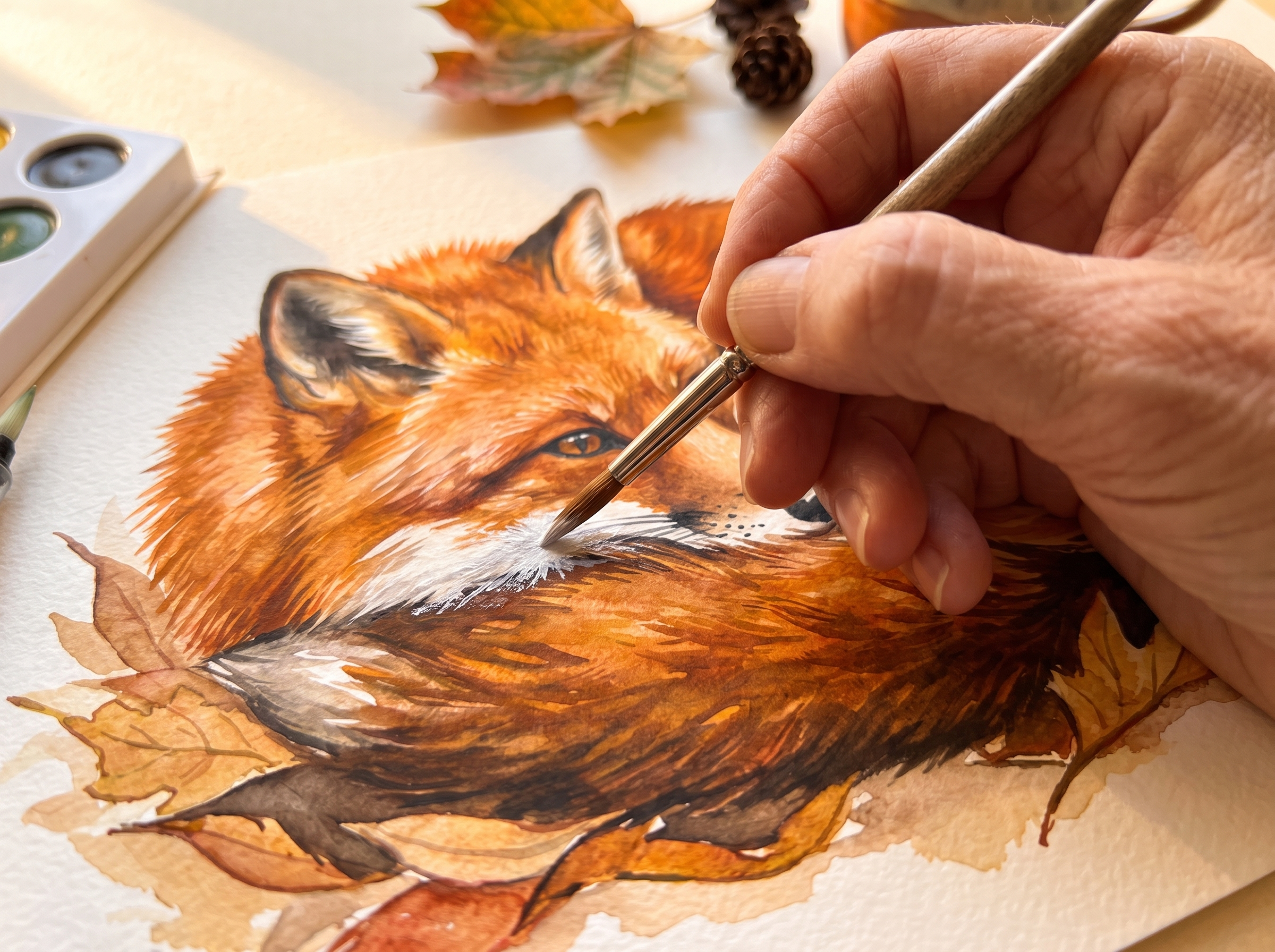
With an almost-dry brush, add soft fur strokes that follow the body and tail. Bring a little brown and black to the ears, the tip of the nose and a gentle line for the closed or sleepy eye. Keep the white chest crisp against the orange. A few strokes are all it takes.
"I painted a sleeping fox for my grandson's room and he named it before the paint was even dry. It is framed above his bed now. Not bad for twenty minutes and a wet brush."
Step 4 - Nestle him in the leaves
Tuck a few soft autumn leaves around the fox in warm reds and golds, letting them overlap his tail. A soft shadow underneath settles him into his nest. Then stop - a calm, slightly loose fox has all the cosiness you want.
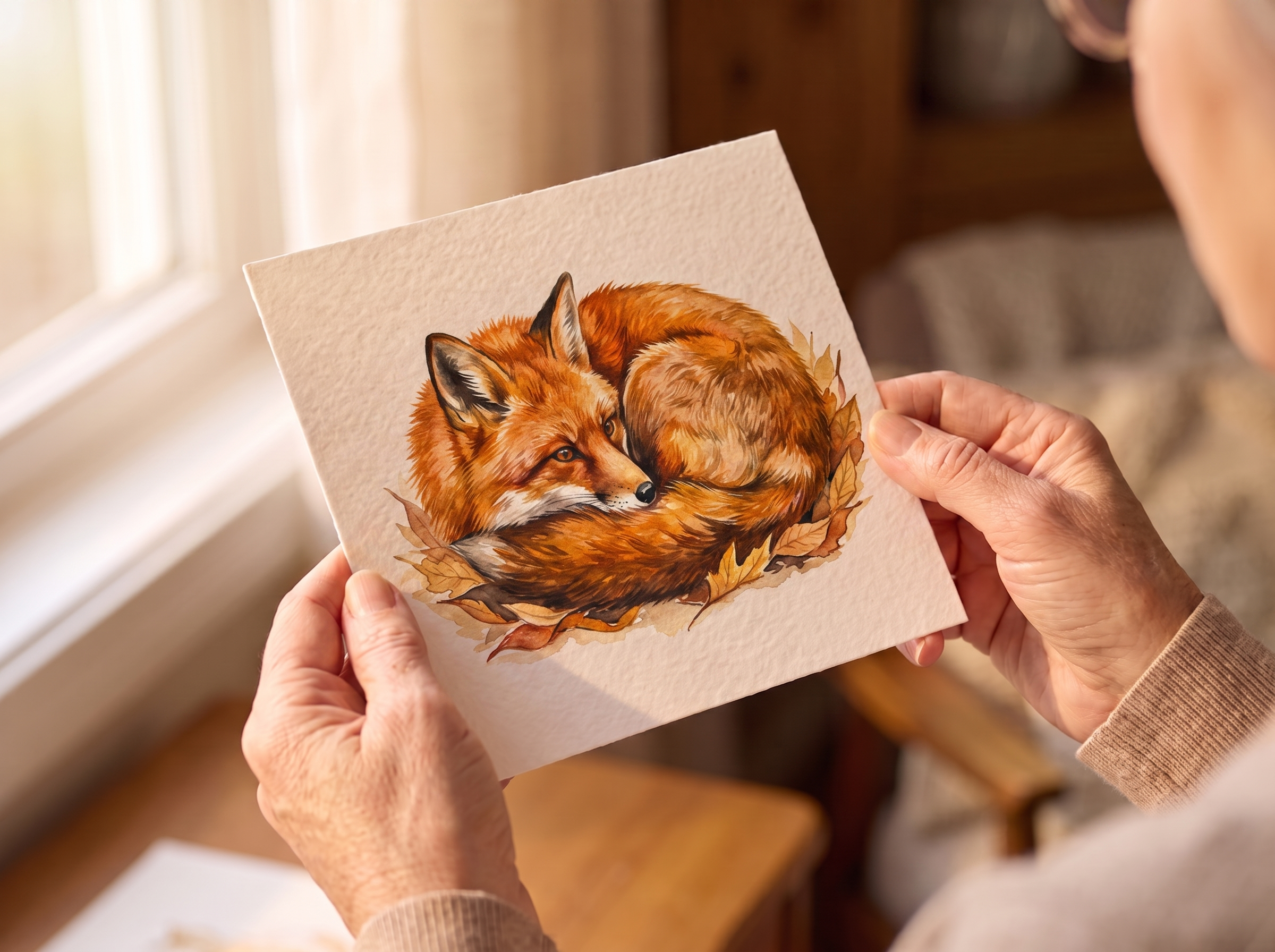
Turn it into a woodland series
A fox is the heart of a whole cosy woodland set - a deer, an owl, a hedgehog, all in the same warm palette. Framed together they make a lovely autumn wall. Browse more easy watercolor ideas for beginners to keep your series going.
Why this is such a calming thing to paint
There is a reason so many of my students reach for a brush when they have had a heavy week. The slow, soft layering is almost meditative, a little like slow breathing, and because there is nothing to "get wrong," your mind finally stops bracing. Research suggests that short bursts of creative activity like this can help lower stress and leave you feeling calmer. It is not a substitute for professional support if you are truly struggling, but as a gentle twenty-minute way to unwind, few things beat it. If that side of painting speaks to you, I have written more about watercolor painting for stress relief.
Frequently asked questions
How do I paint a fox in watercolor if I've never painted before?
Curl it into a simple shape, lay a light russet wash, build a deeper body, add fur and the face, then nestle it in leaves. Keep the chest and tail-tip white and your strokes loose. Most beginners finish in about twenty minutes.
What colors do I need to paint a fox?
A warm russet-orange, a deeper burnt orange, a soft cream for the chest, and a little brown and black for the face. From those you can shade the whole fox. If mixing is new to you, see watercolor color mixing for beginners.
How do I paint soft fox fur?
Use an almost-dry brush and short strokes that follow the direction of the fur, and leave the chest as white paper. Loose, varied marks read as fur far better than stiff, even ones. For smooth blends underneath, see how to blend watercolors.
Your twenty quiet minutes with a sleepy fox
You do not need talent or a free afternoon - you need a brush, a few warm colours, and about twenty minutes. If you would like everything in one box, the Breathly Creative Escape Kit gives you the guided pages, gentle watercolours and mess-free water-brush to paint your fox tonight. Browse the full range of watercolor kits whenever you are ready for your next one.

Margaret teaches watercolor in North Carolina and came to painting in her late forties, after a burnout pushed her to find a gentler way to spend her evenings. She now helps thousands of beginners - most of them over 50 - discover that you don't need talent to feel the calm of a brush in your hand. Her rule: finish something small, and let that little win change your whole evening.